Directors
Every Christopher Nolan Movie in Order: A Complete Watch Guide
Thirteen films, nearly thirty years, and one director who keeps making the same movie about time and grief in increasingly expensive ways. Here is every Nolan film in order, including 2026's The Odyssey.
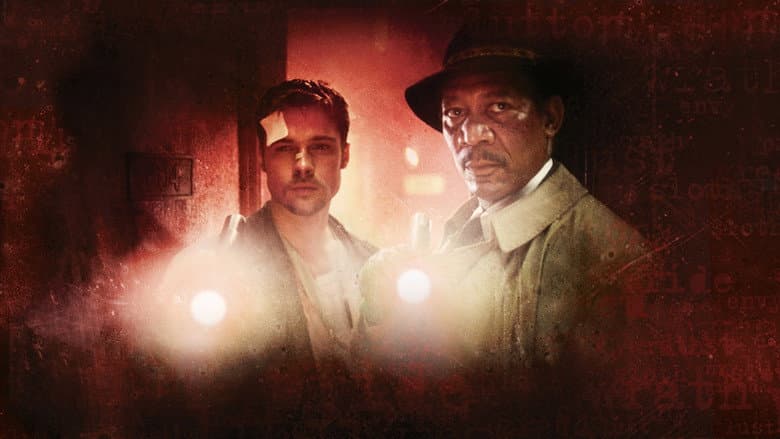
Hero image: Inception (artwork via TMDB)
Key takeaways
- Release order works fine, but starting a newcomer on Memento or Tenet is the fastest way to lose them.
- Only the Dark Knight trilogy requires a specific order. Everything else is standalone.
- The best entry points are The Prestige and Inception: both are twisty without being homework.
- Nolan has made thirteen features across nearly thirty years, and nine of them run over two hours.
Christopher Nolan has directed thirteen feature films. That is a small number for a career this long, and it is the first useful thing to know about him: he does not work quickly, he does not make anything he did not originate or substantially rewrite, and almost every one of his films is about the same three things in different costumes. Time as a physical material. Obsession as a form of grief. And men who cannot stop, told through structures that refuse to move in a straight line.
This guide gives you the full filmography in release order with runtimes and ratings, then three alternative orders depending on who you are watching with. Every title links to its full page here with the trailer, cast, and current availability.
All 13 Nolan movies in release order
| # | Film | Year | Runtime | Rating |
|---|---|---|---|---|
| 1 | Following | 1998 | 69 min | 7.1 |
| 2 | Memento | 2000 | 113 min | 8.2 |
| 3 | Insomnia | 2002 | 118 min | 7.0 |
| 4 | Batman Begins | 2005 | 140 min | 7.7 |
| 5 | The Prestige | 2006 | 130 min | 8.2 |
| 6 | The Dark Knight | 2008 | 152 min | 8.5 |
| 7 | Inception | 2010 | 148 min | 8.4 |
| 8 | The Dark Knight Rises | 2012 | 165 min | 7.8 |
| 9 | Interstellar | 2014 | 169 min | 8.5 |
| 10 | Dunkirk | 2017 | 107 min | 7.5 |
| 11 | Tenet | 2020 | 150 min | 7.2 |
| 12 | Oppenheimer | 2023 | 181 min | 8.0 |
| 13 | The Odyssey | 2026 | 173 min | 8.0 |
The early films: 1998 to 2002

Following (1999)
- 1h 9m
- TMDB 7.1/10
- Drama, Thriller
Shot over a year of weekends on 16mm for roughly six thousand dollars, with a cast of friends and a crew that was mostly Nolan himself. A young writer starts following strangers for material and gets pulled into a burglary. It runs 69 minutes, the shortest feature on this page by a wide margin.
Everything he would spend the next twenty-five years doing is already here in miniature: a fractured timeline, an unreliable protagonist, a structure that only resolves in the final minutes. The budget shows constantly and it does not matter much.
It is a curiosity rather than a great film, and it is the wrong place to start. Come back to it after you have seen four or five others and it becomes genuinely interesting as a blueprint.
Watch it if: you have seen most of his work and want to see the seed of it in 69 minutes.

Memento (2000)
- 1h 53m
- TMDB 8.2/10
- Mystery, Thriller
The film that made his name and still the purest expression of his central obsession. Leonard has anterograde amnesia and cannot form new memories, so he navigates via tattoos, photographs, and notes. The film's black and white sequences run forward. The colour sequences run backward. They meet in the middle.
The structure is not a gimmick. Because you always start a scene knowing as little as Leonard does, you experience his condition rather than observing it. That is a genuinely rare achievement, and it is why the film survives despite everyone knowing it has a twist.
It is also, quietly, his most emotionally honest film. The final revelation is not clever, it is sad, and it says something specific about how people build a story that lets them keep going.
Watch it if: you want the film that defines what people mean by "a Nolan movie".

Insomnia (2002)
- 1h 58m
- TMDB 7.0/10
- Thriller, Crime, Drama
The outlier: a remake of a 1997 Norwegian film, the only Nolan feature not from an original idea of his own, and the only one where he did not write the screenplay. A detective, played by Al Pacino, investigates a murder in an Alaskan town during the midnight sun and cannot sleep because it never gets dark.
It is his most conventional film and his most underrated. The premise handles the theme without any structural trickery, since a man who cannot sleep and a man who cannot escape his own guilt are the same problem. Robin Williams, cast against type as the antagonist, is genuinely unsettling.
At 118 minutes it is also his most accessible. If someone finds his usual structures exhausting, this is the one to hand them.
Watch it if: you want a straight, well-made thriller and a great Pacino performance.
The Dark Knight trilogy: the only films that need an order
These three are a continuous story and should be watched in sequence. They are also the reason Nolan got to make everything after them, since The Dark Knight's success bought him effectively unlimited creative freedom.

Batman Begins (2005)
- 2h 20m
- TMDB 7.7/10
- Drama, Crime, Action
The most underappreciated of the three. It has the difficult job of taking a character who had been camp for decades and making him plausible, and it does it by treating the origin as a training film: how do you actually build this, who supplies the armour, where does the car come from.
The action is the weak point. Nolan had not yet learned to shoot fight scenes legibly and the hand-to-hand sequences are a blur of quick cuts. Everything else, particularly Cillian Murphy's Scarecrow and the Gotham corruption plotting, is excellent.
It also sets up a theme the trilogy actually follows through on: that Batman is a temporary measure that must eventually end, which is not something superhero films usually commit to.
Watch it if: you are starting the trilogy, which you should, because the sequels assume it.

The Dark Knight (2008)
- 2h 32m
- TMDB 8.5/10
- Action, Crime, Thriller
The best film Nolan has made and one of the best of the century. Heath Ledger's Joker is the obvious answer for why, and the performance deserves it: an antagonist with no origin, no plan he will admit to, and no interest in winning, only in proving a point about what people are underneath.
But the film's real achievement is structural. It is a crime epic in the Michael Mann tradition that happens to have a man in a cape in it, shot substantially on IMAX film, with a plot that keeps escalating past where you expect it to stop. The ferry sequence, the hospital, the interrogation: any one of them would carry a lesser film.
At 152 minutes it never drags. It is the rare blockbuster where the moral argument is the entertainment.
Watch it if: you want the peak of the entire filmography, full stop.

The Dark Knight Rises (2012)
- 2h 45m
- TMDB 7.8/10
- Action, Crime, Drama
The messiest of the three and the most ambitious. An eight-year time jump, a broken Bruce Wayne, an occupied city, and a plot with more moving parts than the film can quite hold. Tom Hardy's Bane is a genuinely imposing physical threat after a villain who was purely psychological, which was the right instinct.
The problems are real: the pacing sags badly in the middle, several plot mechanics do not survive scrutiny, and the film asks you to accept a lot about Gotham's occupation. It is also, in its final twenty minutes, the only superhero trilogy conclusion that actually concludes.
At 165 minutes it is the longest of the three. Watch it the same week as the others rather than months later.
Watch it if: you have seen the first two and want the ending, flaws included.

The peak: The Prestige, Inception, Interstellar

The Prestige (2006)
- 2h 10m
- TMDB 8.2/10
- Drama, Mystery, Science Fiction
His most tightly constructed film and arguably his best screenplay. Two rival magicians in Victorian London destroy each other over a trick, and the film is built exactly like a magic trick: pledge, turn, prestige, announced in the opening minutes and then executed on you anyway.
It contains two separate twists that both work, which almost never happens. And unlike most twist films, the reveals recontextualize character rather than just plot: what looks like obsession turns out to be a specific, terrible kind of commitment.
It is also the most rewatchable film he has made. The information is all on screen from the first scene and you will not see it.
Watch it if: you want the cleverest thing he has made, at a manageable 130 minutes.

Inception (2010)
- 2h 28m
- TMDB 8.4/10
- Action, Science Fiction, Adventure
The film that proved a mainstream audience would happily follow four nested layers of narrative if the rules are explained clearly enough. And they are: the first hour is essentially a tutorial, delivered through a character who exists specifically to ask questions on your behalf.
The action is the best he has directed. The rotating corridor fight was built as an actual rotating set with Joseph Gordon-Levitt performing in it, and it looks correct because it is correct. The van falling from the bridge, cut across four timelines running at different speeds, is a genuine editing achievement.
The ending has been argued about for over fifteen years, and the argument misses the point: the film tells you what it thinks matters in the final shot, and it is not the top.
Watch it if: you want the best possible balance of blockbuster spectacle and structural ambition.

Interstellar (2014)
- 2h 49m
- TMDB 8.5/10
- Adventure, Drama, Science Fiction
His most divisive film and his most emotional. A dying Earth, a wormhole near Saturn, and a father who leaves his daughter to look for somewhere else to live. Kip Thorne's involvement produced a black hole rendering derived from actual relativity equations.
The middle hour is the best sustained sequence in the filmography. The wave planet, where every hour costs seven years back home, and the scene immediately after where Cooper watches two decades of messages, is devastating and entirely earned.
The third act trades physics for metaphor and the dialogue occasionally states the theme out loud, which is the film's real weakness. Whether you forgive that determines everything. At 169 minutes, give it a full evening and a good sound system.
Watch it if: you want the one that makes people cry, and you can live with a metaphysical ending.
The recent three: Dunkirk, Tenet, Oppenheimer

Dunkirk (2017)
- 1h 47m
- TMDB 7.5/10
- War, Action, Drama
His shortest film since Following and his most formally daring. Three timelines running at different lengths, one week on the beach, one day at sea, one hour in the air, intercut so they converge at the climax. Almost no dialogue, almost no character backstory, no named villain ever shown clearly.
It is a survival film rather than a war film. Nobody makes a speech. Hans Zimmer's score is built around a Shepard tone, an audio illusion of endlessly rising pitch, which is why the tension never seems to release.
At 107 minutes it is the most efficient thing he has made and it should be experienced as loud as your setup allows.
Watch it if: you want maximum tension with minimum exposition, in under two hours.

Tenet (2020)
- 2h 30m
- TMDB 7.2/10
- Action, Thriller, Science Fiction
The hardest film to defend and the most interesting failure. Objects and people can have their entropy inverted, moving backward through time while everyone else moves forward, and the film stages several action sequences with both directions happening simultaneously in the same frame.
Those sequences are extraordinary and genuinely unlike anything else. The problems are elsewhere: the sound mix buries crucial dialogue under the score, the protagonist has no name and no interior life, and the plot mechanics require attention the film does not give you room to pay.
Watch it with subtitles on. That single change fixes more of this film's problems than seems reasonable.
Watch it if: you have seen the rest, you like puzzles, and you will accept being lost for a while.

Oppenheimer (2023)
- 3h 1m
- TMDB 8.0/10
- Drama, History
A three-hour talking film about physics, security clearance hearings, and committee politics, which became one of the biggest box office successes of the decade. That is a genuinely strange outcome and it happened because the film is edited like a thriller.
The structure is his most controlled since Memento: colour sequences from Oppenheimer's subjective view, black and white sequences from Lewis Strauss's, cut against each other so the film's real subject, a bureaucratic revenge, only becomes visible late.
Cillian Murphy holds the centre with a performance that is almost entirely interior. The Trinity test sequence, staged without digital effects and with a deliberate silence before the sound arrives, is the best thing in the film. At 181 minutes it is his longest and it does not feel it.
Watch it if: you want the most mature film he has made and you can sit for three hours.
The thirteenth: The Odyssey

The Odyssey (2026)
- 2h 53m
- TMDB 8.0/10
- Adventure, Action, Fantasy
His most recent film, released 15 July 2026, and the biggest departure of his career: the first time since Insomnia that he has worked from someone else's story, and the first time ever from a literary source.
Matt Damon plays Odysseus, with Anne Hathaway as Penelope, Tom Holland as Telemachus, Robert Pattinson as Antinous, and Charlize Theron as Calypso. At 173 minutes it is his second longest film after Oppenheimer.
Thematically it is less of a swerve than it appears. Homer's poem is told out of order, opens ten years after the war, and delivers its most famous sequences as a flashback narrated by a man celebrated for lying. A director who made Memento and The Prestige was always going to find that interesting.
We have a fuller guide to the film covering the cast and whether you need to know the poem first.
Watch it if: you want to see where he went after Oppenheimer.
Three better viewing orders
If you are completely new to Nolan
Do not start with Memento or Tenet. Start with a film that rewards attention without demanding a diagram.
- Inception - explains its own rules, huge, immediately gripping
- The Prestige - the same pleasures at a smaller scale
- The Dark Knight - his best film, and no setup required beyond Batman Begins
- Memento - now you are ready for the structure
- Interstellar - the emotional one
- Oppenheimer - the mature one
If you want a themed run
Group by obsession rather than chronology. Time as material: Memento, Inception, Interstellar, Tenet. Men destroyed by a fixation: Following, The Prestige, Insomnia, Oppenheimer. Institutions under pressure: the Dark Knight trilogy, Dunkirk. Watching a themed set back to back makes the connective tissue extremely visible.
If you have limited time
Four films give you the whole director: Memento for the structure, The Dark Knight for the peak, Dunkirk for the formal discipline, and Oppenheimer for where he ended up. That is 549 minutes, or roughly two long evenings.
If you want more director-led guides, our Denis Villeneuve retrospective covers the other major working director of ambitious blockbusters. Our twist ending list features three Nolan films. And you can browse everything he has made through the thriller and science fiction catalogs.
Frequently asked questions
What order should I watch Christopher Nolan movies in?
Release order works for everything except the Dark Knight trilogy, which must be watched in sequence. If you are new to him, start with Inception or The Prestige rather than Memento or Tenet, both of which are much easier once you know his habits.
How many movies has Christopher Nolan directed?
Thirteen feature films between 1998 and 2026: Following, Memento, Insomnia, Batman Begins, The Prestige, The Dark Knight, Inception, The Dark Knight Rises, Interstellar, Dunkirk, Tenet, Oppenheimer, and The Odyssey.
What is the best Christopher Nolan movie?
The Dark Knight, by most measures. The Prestige is the tightest screenplay, Oppenheimer is the most mature, and Interstellar produces the strongest emotional reaction. Tenet is the weakest of the thirteen.
Are the Nolan movies connected?
Only the Dark Knight trilogy shares a continuity. The rest are entirely standalone, though they repeat themes, actors, and structural habits enough that they feel connected.
Which Nolan movie is the shortest?
Following at 69 minutes, followed by Dunkirk at 107. Oppenheimer is the longest at 181 minutes, with The Odyssey at 173 and Interstellar at 169.
Is The Odyssey a Christopher Nolan movie?
Yes. It is his thirteenth feature, released 15 July 2026, starring Matt Damon as Odysseus. It runs 173 minutes and is his first adaptation of a literary source.
Tags
Ratings, runtimes, and artwork come from TMDB and can change over time. teasertrack is a free discovery site, not a streaming service: every pick links to its full movie page where you can check trailers, cast, and current availability.