Guides
The Best Book-to-Movie Adaptations, and Why Faithfulness Is the Wrong Test
The best adaptations are frequently the least faithful ones. Here are sixteen that got it right, and the specific thing each one changed to make the book work on screen.
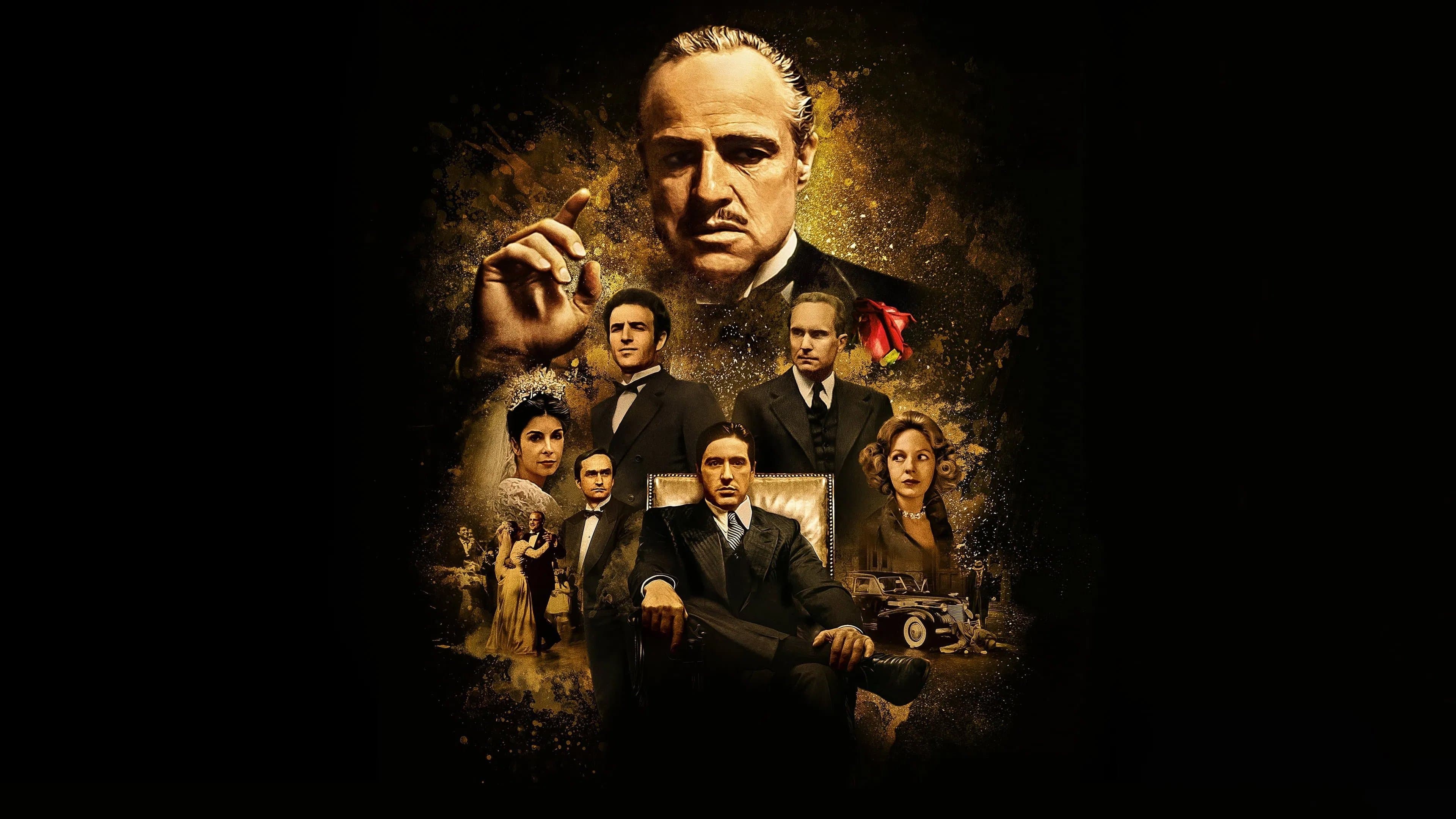
Hero image: The Godfather (artwork via TMDB)
Key takeaways
- The Godfather is the best adaptation ever made and it cut roughly a third of the novel's subplots.
- Faithfulness is the wrong test. Prose and film do different things, so a transcription is usually inert.
- The best adaptations identify the one thing the book is actually about and rebuild around it.
- Several films here are considerably better than their source, which is more common than book readers admit.
"They changed it from the book" is the most common complaint about adaptations and the least useful. Prose and film are not the same tool. A novel can spend forty pages inside someone's head; a film has roughly two hours and can only show you a face. A novel can have nine subplots; a film that keeps all nine will feel like a summary of itself.
So the better test is: did the film identify what the book is actually about, and did it find a cinematic way to deliver that? By that measure the best adaptations are frequently the least faithful, and the worst are often the ones that tried hardest to include everything.
The top five

The Godfather (1972)
- 2h 55m
- TMDB 8.7/10
- Drama, Crime
Changed: roughly a third of the novel, including entire subplots that Coppola cut without hesitation.
Mario Puzo's novel is a pulpy bestseller with a great deal of material that has nothing to do with the Corleone family's central tragedy. Coppola identified what the book was about, a son who did not want this becoming the thing his father was, and cut everything that did not serve it.
The film also invents its own language. The novel cannot do what Gordon Willis's photography does, keeping Marlon Brando's eyes in shadow so you cannot read him, or what the baptism sequence does by cross-cutting a sacrament with five murders.
Puzo co-wrote the screenplay and has been clear that the film improved on his book, which is the most honest assessment anyone involved has offered. 175 minutes.
Watch it if: you want the best adaptation ever made, and one of the best films.

No Country for Old Men (2007)
- 2h 2m
- TMDB 7.9/10
- Crime, Thriller, Western
Changed: almost nothing, which is the exception that proves the rule.
Cormac McCarthy's novel is written in a spare, dialogue-heavy style with very little interiority, which makes it unusually close to a screenplay already. The Coens reportedly worked with the book open beside them.
What they added was absence. The film has virtually no score, so the entire soundtrack is wind, boots, and breath, and that silence does what McCarthy's prose rhythm does on the page.
The ending, in which the climactic confrontation happens off screen and the film closes on a man describing a dream, is faithful to the novel and infuriated audiences who expected a resolution. It is exactly right.
Watch it if: you want to see the rare case where near-total fidelity was the correct choice.

Arrival (2016)
- 1h 56m
- TMDB 7.6/10
- Drama, Science Fiction, Mystery
Changed: added an entire geopolitical thriller plot that does not exist in the source.
Ted Chiang's Story of Your Life is a novella with almost no external conflict. It is a linguist, a translation problem, and a meditation on determinism. That is superb on the page and would be inert on screen.
Eric Heisserer's screenplay added the international standoff, the ticking clock, and the threat of military escalation, none of which are in Chiang's text, and used them to externalise a purely internal story.
Crucially it kept the thing that mattered: the structural trick about how you are reading the film's timeline, which is not a twist but a change in grammar. That is a genuinely difficult thing to translate and the film does it visually rather than in dialogue.
Watch it if: you want the clearest example of adding material in order to be faithful to a book's meaning.

The Lord of the Rings: The Fellowship of the Ring (2001)
- 2h 59m
- TMDB 8.4/10
- Adventure, Fantasy, Action
Changed: removed Tom Bombadil, compressed seventeen years into weeks, and reassigned several characters' actions.
Tolkien's novel has a leisurely first act with extended digressions that would have killed a film. Peter Jackson cut them, and the omissions that book readers complain about are almost all improvements in pacing.
What the film adds is physical reality: forced perspective rather than digital scaling for the hobbits, real armour made by hand, and a New Zealand landscape doing the work Tolkien's descriptions do on the page.
It also finds visual solutions for interior material. Frodo's growing burden is conveyed by the Ring's weight on a chain and by Elijah Wood's face, not by narration. 179 minutes, and our franchise guide covers the trilogy as a whole.
Watch it if: you want the most successful adaptation of a supposedly unfilmable book.
The Shining (1980)
- 2h 24m
- TMDB 8.2/10
- Horror, Thriller
Changed: essentially everything about the protagonist, and Stephen King has never forgiven it.
In the novel, Jack Torrance is a sympathetic alcoholic who is gradually possessed by the hotel, and his arc is a tragedy of addiction. Kubrick casts Jack Nicholson and presents him as already unstable when he arrives.
That is a worse adaptation and a much better film. If Jack is corrupted by the hotel, the story is mechanical. If he is a man who was already like this and the hotel simply gave him permission, the film becomes genuinely disturbing and the supernatural element becomes ambiguous.
King's objection is legitimate and the film is a masterpiece. Both things are true, and it is the clearest illustration of why fidelity is the wrong metric. 144 minutes.
Watch it if: you want the definitive case study in a great film being a bad adaptation.

Six through eleven

Project Hail Mary (2026)
- 2h 37m
- TMDB 8.7/10
- Science Fiction, Adventure
Changed: compressed the novel's extensive technical explanation while keeping its structure intact.
Andy Weir's book is a first-person account by a man who explains everything he does, which is delightful to read and unfilmable as written. Drew Goddard's screenplay keeps the alternating structure, present-day ship and past-tense flashback, and converts the explanation into action.
The central relationship is the thing the film had to get right, and it does. Making an audience care about a non-human character with no face is genuinely hard, and Lord and Miller solve it through behaviour rather than through dialogue.
At 8.7 from nearly 7,000 votes it is the highest-rated wide release of 2026 so far, and it appears in our best of 2026 list.
Watch it if: you want the best recent adaptation and one of the year's best films.

Jaws (1975)
- 2h 4m
- TMDB 7.7/10
- Horror, Thriller, Adventure
Changed: cut an affair, a mafia subplot, and made the shark barely visible.
Peter Benchley's novel contains a substantial adultery plot between Hooper and Brody's wife, and organised crime pressure on the mayor. Spielberg removed both, which turns a busy potboiler into three men on a boat.
The most famous change was an accident. The mechanical shark malfunctioned constantly, so Spielberg shot around it, using John Williams's two-note motif and the camera's point of view instead. Withholding the monster made the film.
The Indianapolis monologue, largely written during production, is the best scene in the film and does not exist in the book.
Watch it if: you want to see limitations turned into technique.

Blade Runner (1982)
- 1h 58m
- TMDB 7.9/10
- Science Fiction, Drama, Thriller
Changed: kept a premise and discarded almost everything else, including the title.
Philip K. Dick's Do Androids Dream of Electric Sheep? is a strange, funny novel about a man who wants a real animal and about a fake religion. Almost none of that survives.
What Ridley Scott kept is the central question of how you distinguish a manufactured person from a real one, and what he added is a visual world so complete that it defined cyberpunk for forty years.
It is a case where the film and the book are best treated as separate works that share an idea. Both are good and they are not substitutes.
Watch it if: you want to see an adaptation that took a premise and built somewhere else entirely.

Trainspotting (1996)
- 1h 34m
- TMDB 8.0/10
- Drama, Crime
Changed: restructured a fragmented novel of separate voices into a single narrative.
Irvine Welsh's book is written in Scots dialect across shifting first-person chapters with no throughline. John Hodge's screenplay picks Renton as the spine and reorganises everything around him.
Danny Boyle's other solution was tonal. The novel is bleak throughout; the film is genuinely funny and enormously energetic for its first hour, which makes the collapse in the second half land far harder than unrelieved grimness would.
The opening monologue over a chase, which is assembled from the book's prose, is one of the best openings of the 1990s. 93 minutes.
Watch it if: you want to see a shapeless book given a spine.

The Remains of the Day (1993)
- 2h 14m
- TMDB 7.4/10
- Drama, Romance
Changed: very little, and it solved the hardest problem on this page.
Kazuo Ishiguro's novel is narrated by a butler who cannot admit anything to himself, so the entire book operates in the gap between what he says and what is obviously true. That is a purely literary effect.
The film's solution is Anthony Hopkins's face. The performance is built almost entirely on suppression: a man declining to react, repeatedly, for two hours, while the camera stays on him long enough for you to see the cost.
The scene in which Emma Thompson tries to take a book from his hands is one of the most charged things in cinema and nothing happens in it.
Watch it if: you want to see an unreliable narrator translated into performance.

Little Women (2019)
- 2h 15m
- TMDB 7.8/10
- Drama, Romance
Changed: restructured a linear novel into two interleaved timelines.
Greta Gerwig's key decision was to cut between the sisters' childhood and their adult lives rather than proceeding chronologically, which turns a warm episodic novel into a film about memory and about what you lose by growing up.
It also changes the ending, or rather makes the ending ambiguous, foregrounding the fact that Alcott was pressured by her publisher into marrying Jo off. The film has it both ways deliberately and that is the point.
It is the most structurally intelligent adaptation of the last decade. 135 minutes.
Watch it if: you want to see restructuring used as interpretation.
Five more


Fight Club changed the novel's ending and Chuck Palahniuk has said he prefers the film's. Gone Girl was adapted by Gillian Flynn from her own novel, which is rare and is why the tone survives so precisely. Atonement had to solve a novel whose entire point is a revelation about the act of writing, and Joe Wright's solution, a final direct-address interview, works. Room was also adapted by its author, Emma Donoghue, and correctly keeps the child's perspective for the first half. And Children of Men discards nearly all of P.D. James's plot and keeps only the premise, which is why it is far better than the book.
The four things good adaptations do
| Technique | Example | What it solves |
|---|---|---|
| Cut ruthlessly | The Godfather | Novels have room for subplots; films do not |
| Add external conflict | Arrival | Internal stories need something to happen |
| Restructure the timeline | Little Women | Turns chronology into an argument |
| Translate interiority into performance | The Remains of the Day | Film cannot narrate a mind, only show a face |
Read first or watch first?
Watch first, in most cases. A film has roughly two hours to establish a world that a novel built over four hundred pages, and if you arrive already holding the book's version, the film's compressions read as omissions rather than as choices.
The exception is when the book's pleasure is primarily in its prose rather than its plot, which applies to Ishiguro, McCarthy, and Chiang on this list. In those cases the film cannot spoil the book because the book is not doing the same thing.
For more, our true stories guide covers adaptations of real events, Nolan's The Odyssey covers the most ambitious recent adaptation of all, and the drama catalog has the wider list.
Frequently asked questions
What is the best book to movie adaptation?
The Godfather, which cut roughly a third of Mario Puzo's novel and produced a better work than its source. Puzo, who co-wrote the screenplay, has said as much himself.
Should a movie be faithful to the book?
Not necessarily. Prose and film do different things, so a transcription is usually inert. The better test is whether the film identified what the book is actually about and found a cinematic way to deliver it.
Should I read the book before watching the movie?
Usually watch first. A film has two hours to build a world the novel spent four hundred pages on, and arriving with the book in mind makes its necessary compressions read as failures rather than choices.
Which movies are better than the books they came from?
The Godfather, Jaws, Children of Men, and The Shining are all widely considered improvements on their sources, though Stephen King strongly disagrees about the last one.
Why did The Shining change so much from the book?
Kubrick made Jack Torrance already unstable on arrival rather than gradually possessed by the hotel. That removes the novel's addiction-tragedy arc and makes the supernatural element ambiguous, which is a worse adaptation and a considerably better film.
Tags
Ratings, runtimes, and artwork come from TMDB and can change over time. teasertrack is a free discovery site, not a streaming service: every pick links to its full movie page where you can check trailers, cast, and current availability.


